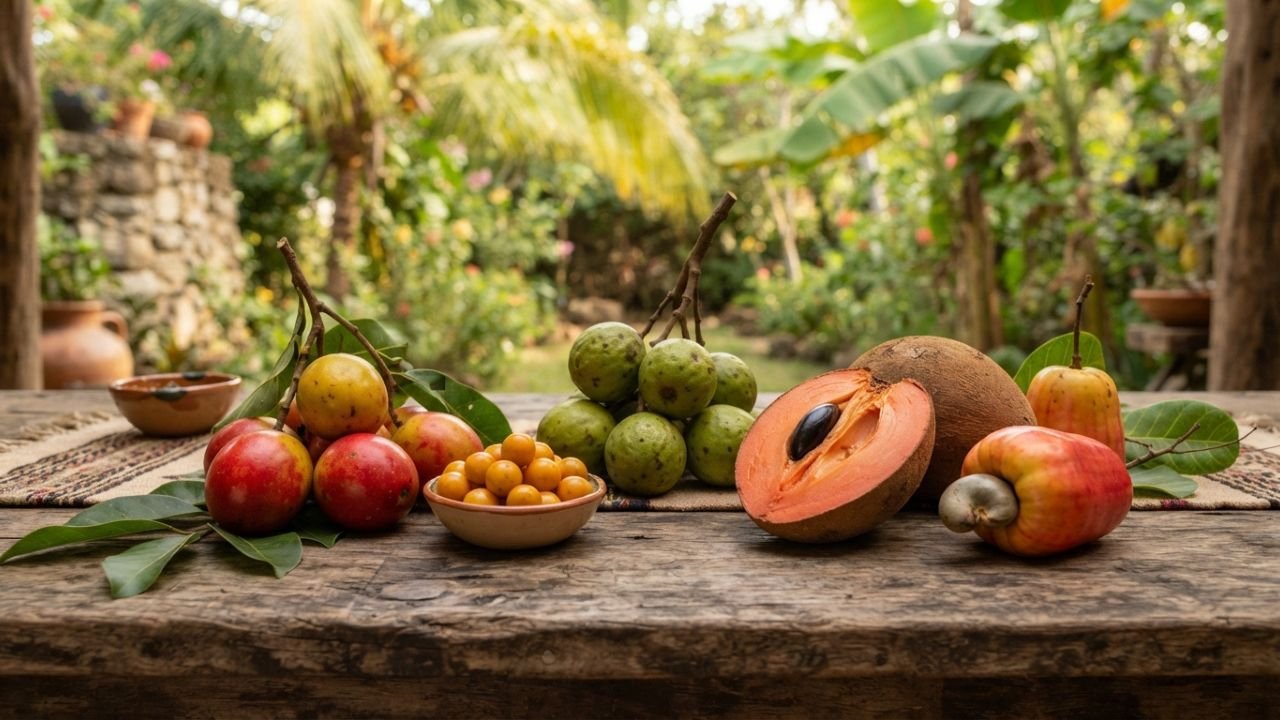
El Salvador is known for its tropical climate and rich variety of fresh fruits. While mangoes, bananas, pineapples, and papayas are widely familiar, the country also has several traditional fruits that may be less familiar to international readers.
Jocote, nance, mamoncillo, mamey, and marañón are five fruits worth discovering. They offer different flavors and textures, from the sweet-and-tart taste of jocote to the creamy sweetness of mamey. Some are enjoyed fresh, while others are used in traditional drinks, sweets, and desserts. Like other fruits, these Salvadoran varieties can be part of a varied diet; Harvard’s Nutrition Source a post Vegetables and Fruits emphasizes the importance of eating a variety of fruits and vegetables.
In this guide, we’ll explore these five Salvadoran fruits, including what they taste like and how they are commonly enjoyed.
What Are El Salvador’s Traditional Fruits?
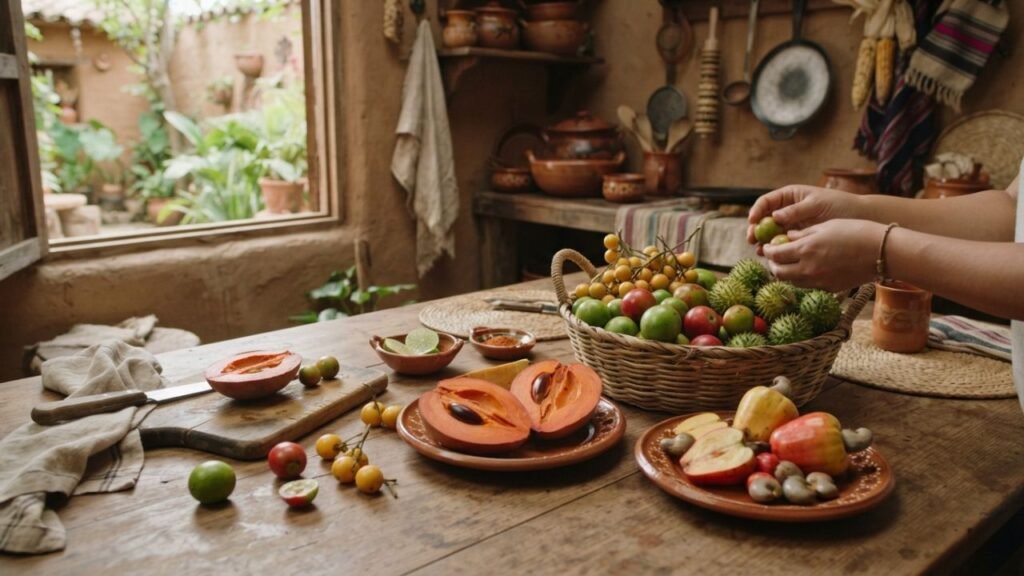
Traditional fruits in El Salvador are familiar local fruits that have been enjoyed for generations. Many are eaten fresh when they are ripe and in season, while others are turned into refreshing drinks or sweet dishes.
Fresh and Seasonal
Jocote, nance, and mamoncillo are popular examples of fruits that are often enjoyed fresh during their seasons.
Used in Local Foods
Mamey and marañón are also used in drinks and sweet preparations, showing how these fruits are part of everyday Salvadoran cuisine.
5 El Salvador Fruits Worth Discovering
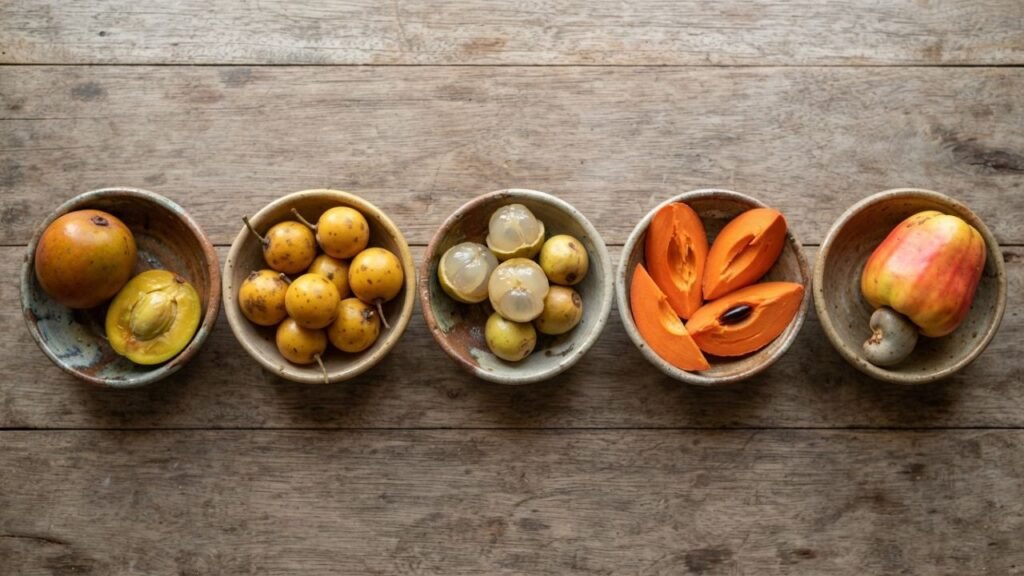
El Salvador is home to many tropical fruits, but five are especially worth trying: jocote, nance, mamoncillo, mamey, and marañón. Each fruit has its own flavor, texture, and traditional uses.
Jocote
Jocote is a small stone fruit that changes as it ripens. When firm, it can taste tart, while ripe jocote becomes softer and sweeter.It has a pleasant sweet-and-tart flavor and is commonly eaten fresh. It is also used in traditional sweet preparations such as jocote en miel.
Nance
Nance is a small yellow fruit with a strong aroma and a distinctive sweet-and-tart flavor. Its taste becomes stronger as it ripens.It can be eaten fresh or used in traditional drinks and sweets. Its unusual aroma and flavor make it one of El Salvador’s more distinctive fruits.
Mamoncillo
Mamoncillo is a small tropical fruit with a firm green shell and juicy pulp around a large seed. It is also known as Spanish lime or genip.The pulp is juicy, refreshing, and mildly sweet with a tart finish. It is usually eaten fresh and can be especially enjoyable when chilled.
Mamey
Mamey is known for its soft orange or reddish-orange flesh and creamy texture. When ripe, it has a rich and naturally sweet flavor.It is delicious fresh and is also commonly used in smoothies, fruit drinks, and desserts because of its smooth texture.
Marañón
Marañón is the fleshy fruit of the cashew tree. The cashew nut grows outside the fruit, making it different from many other common fruits.The fruit is juicy and naturally sweet with a distinctive tropical flavor. It can be eaten fresh or used to prepare refreshing drinks and sweet dishes.
Popular Culinary Uses for Salvadoran Fruits
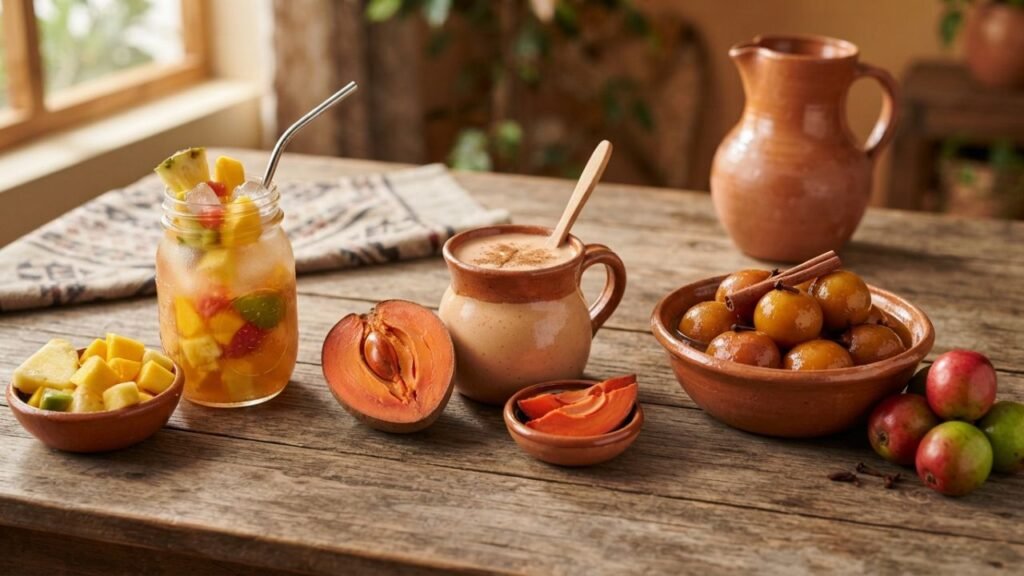
Salvadoran fruits are enjoyed in more than just their fresh form. Their natural sweetness, tartness, and juicy textures make them useful in traditional drinks, desserts, sweets, and everyday snacks. Fruits such as jocote, nance, mamey, and marañón can be prepared in different ways while still keeping their distinctive flavors.
Fresh Snacks
Jocote, nance, mamoncillo, and mamey can be enjoyed fresh when ripe. Their different textures make each fruit a unique snack.
Traditional Drinks
Fruits such as mamey, marañón, and nance can be blended with water, ice, and sweetener to create refreshing fruit drinks.
Sweets and Desserts
Jocote is especially suitable for sweet preparations because its natural tartness balances added sugar. Mamey can also be used in creamy desserts.
Delicious Ways to Enjoy Salvadoran Fruits
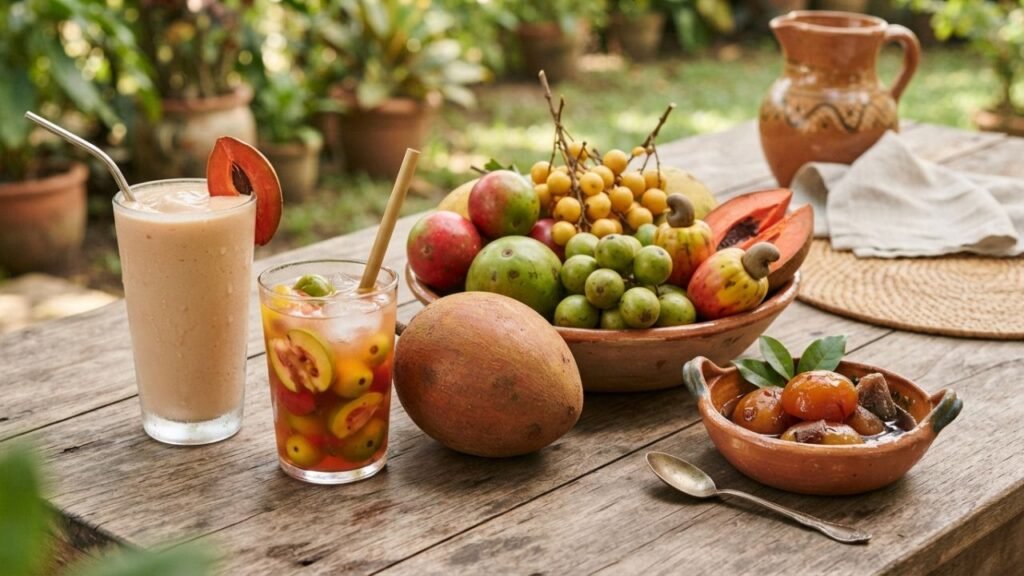
Salvadoran fruits can be enjoyed in simple ways that bring out their natural flavors and textures. They are often eaten fresh or chilled as refreshing snacks, while fruits like mamey work well in smoothies and drinks. Jocote can also be cooked with syrup to create a traditional sweet treat. Enjoying these fruits fresh is a simple way to add variety to your diet, and Harvard’s Nutrition Source, a post Common Questions About Fruits and Vegetables notes that fruits provide beneficial nutrients alongside their natural sugars.
Eat Them Fresh
Ripe fruit can be eaten on its own or served as part of a colorful fruit plate. This is one of the easiest ways to compare their flavors.
Make Drinks and Smoothies
Mamey works especially well in creamy smoothies, while nance and marañón can add distinctive flavors to refreshing fruit drinks.
Try Traditional Sweet Preparations
Jocote cooked with syrup is a classic way to enjoy the fruit. Other fruits can also be combined with sugar in simple desserts.

Frequently Asked Questions
The following questions cover some of the most common things people want to know about Salvadoran fruits, including their flavors, uses, and availability.
1. What fruits are common in El Salvador?
Mango, pineapple, banana, papaya, jocote, nance, mamoncillo, mamey, and marañón are among the fruits enjoyed in El Salvador.
2. Which Salvadoran fruit is naturally sweet?
Ripe mamey is known for its rich and naturally sweet flavor. Fully ripe jocote can also be quite sweet.
3. Which fruits are best eaten fresh?
Jocote, nance, mamoncillo, and mamey are all good choices for fresh eating. The best option depends on whether you prefer tart, juicy, or creamy fruit.
4. Which fruits are used in drinks and desserts?
Mamey, marañón, jocote, and nance can be used in traditional drinks, sweets, smoothies, and desserts.
5. Can these fruits be found outside El Salvador?
Some can be difficult to find because they are seasonal. Latin American grocery stores and specialty markets may carry them when they are available.
Conclusion
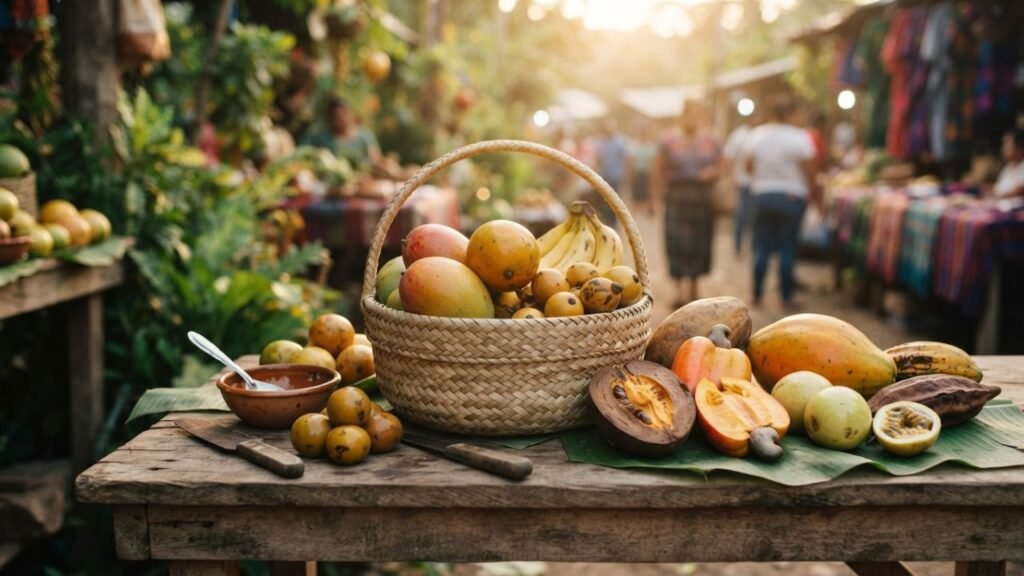
Jocote, nance, mamoncillo, mamey, and marañón are five traditional El Salvador fruits worth trying for their unique flavors and textures. From sweet and creamy mamey to tart and juicy jocote, each fruit offers a different taste of Salvadoran food culture and can be enjoyed fresh or in traditional drinks and desserts.
About the Author
Ya Mara Strucher is a food and travel writer who enjoys exploring traditional ingredients, regional flavors, and food cultures from around the world. Through her writing, she helps readers discover unfamiliar foods in simple and approachable ways.