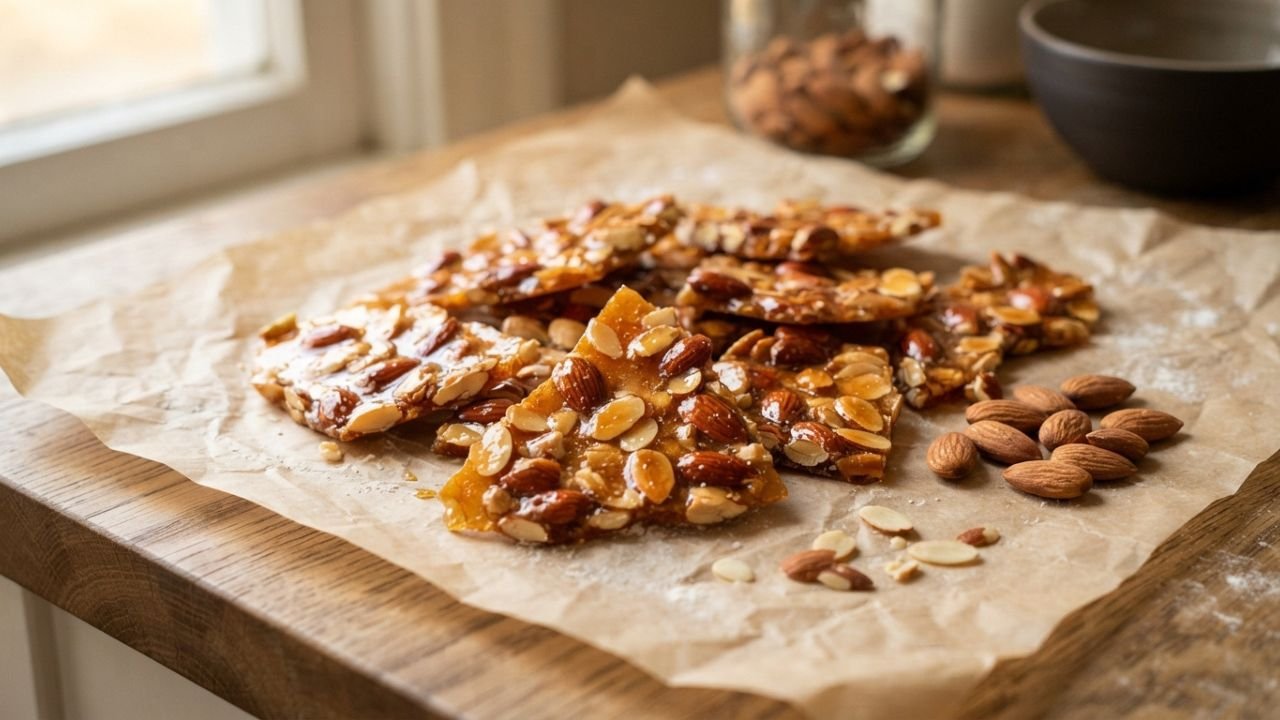
Almond nut brittle is a classic homemade candy made by coating toasted almonds with hot, caramelized sugar. When done properly, it should be thin, golden, and incredibly crisp, with a clean snap when you break it. The combination of crunchy almonds and sweet caramel makes it a simple but satisfying treat.
The main secret to crisp and crunchy brittle is controlling the caramel carefully. If the sugar is not cooked enough, the brittle can turn chewy or sticky. On the other hand, cooking it for too long can make the caramel dark and bitter. Using the right temperature, spreading the brittle thinly, and protecting it from moisture will help you get the texture you want.
What Is Almond Nut Brittle?
Almond nut brittle is a hard, crunchy candy made from caramelized sugar and almonds. Butter, vanilla, or salt may be added for extra flavor. The caramel is cooked at a high temperature to remove moisture, then coats the almonds and hardens as it cools, giving the brittle its firm texture and crisp snap.
Ingredients for Almond Brittle
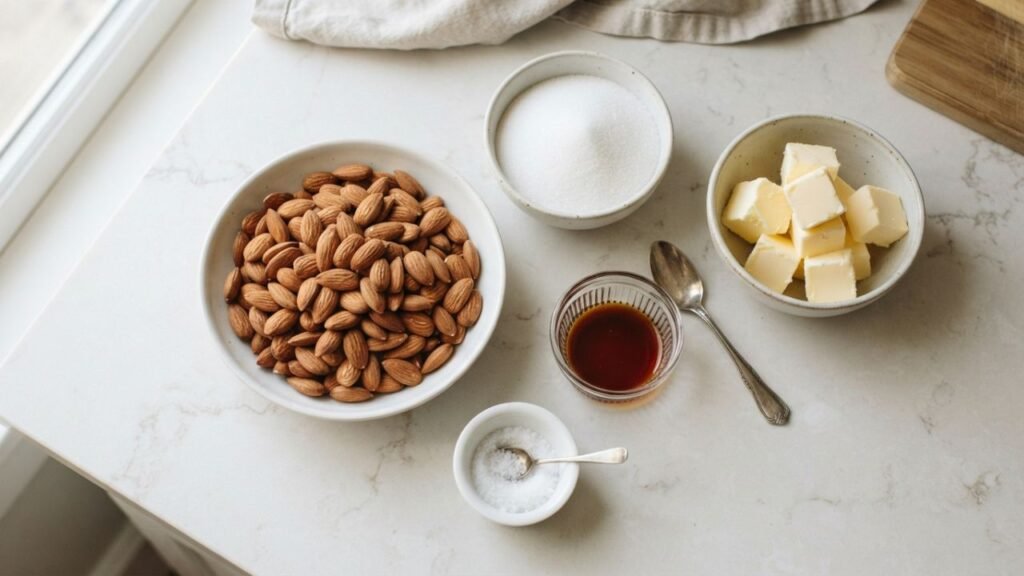
Almond brittle uses a small number of ingredients, but each one has an important role. Granulated sugar forms the caramel, almonds provide the main crunch, and butter adds richness. Fresh ingredients also make a noticeable difference. Fresh almonds have a better flavor and texture, while good-quality butter and vanilla can give the brittle a more balanced taste.
Choosing Almonds
For Almond Nut Brittle, use fresh whole, chopped, or sliced almonds. Whole or roughly chopped almonds usually give the brittle a stronger crunch and more substantial texture.
Sugar, Butter, and Flavorin
Granulated white sugar is the main ingredient for caramel. Butter adds richness, while vanilla and a small amount of salt can improve the flavor without overpowering the almonds.
Preparing the Almonds
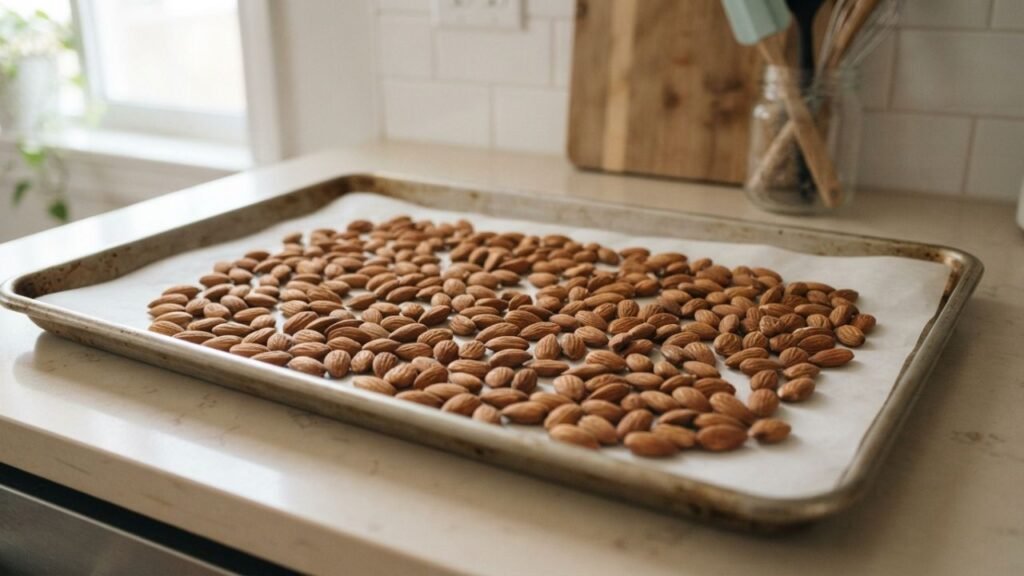
Prepare the almonds before starting the caramel. Lightly toasting them enhances their flavor and gives them a deeper, nuttier taste. Keeping the almonds slightly warm also helps them mix easily with the hot caramel without cooling the mixture too quickly.
Toasting
Spread the almonds in a single layer and toast them until lightly golden and fragrant. Do not over-toast them because they can burn and become bitter.
Cooking the Caramel
Cooking the caramel is the most important stage when making crisp almond brittle. The sugar needs to lose enough moisture to become hard and brittle after cooling. Use a heavy-bottomed saucepan for more even heating. Keep a close eye on the sugar as it changes color because caramel can go from perfectly golden to burnt in a very short time.
Caramelizing Sugar
Heat the sugar gradually until it melts and turns a golden amber color. Avoid excessive stirring while it caramelizes, and maintain a controlled temperature to prevent burning. The caramel should be smooth, glossy, and evenly cooked before adding the almonds.
Checking Doneness
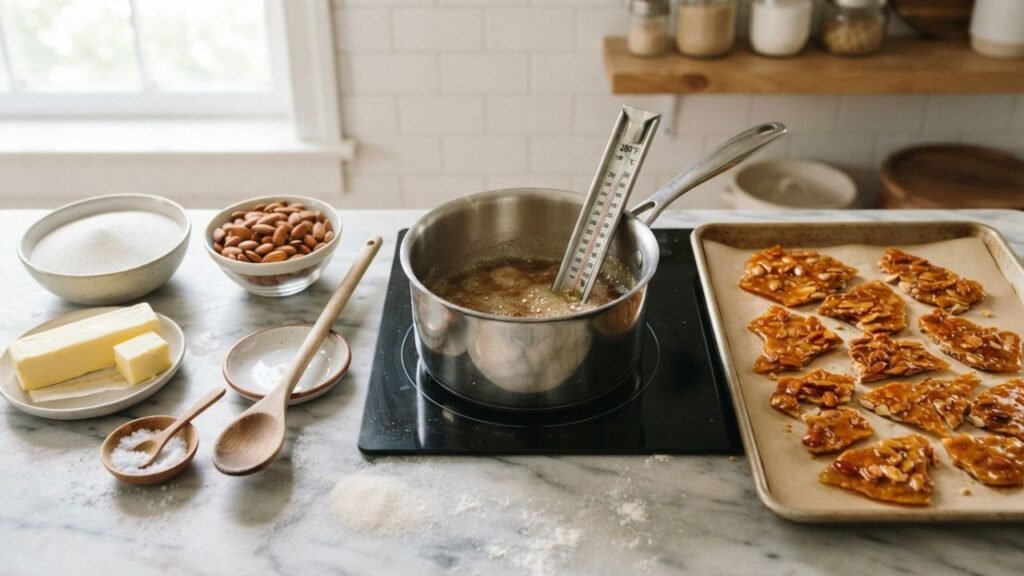
The caramel should reach about 300°F (149°C), known as the hard-crack stage. This ensures the brittle becomes hard and crisp when cooled. A candy thermometer is the most reliable way to check the temperature. For more details on making caramel and understanding its different stages, see the website( King Arthur Baking ) post How to Make Caramel (Without Breaking a Sweat), which notes that the hard-crack stage is around 295–310°F (146–154°C), the range used for brittle and other hard candies.
Adding the Almonds and Butter
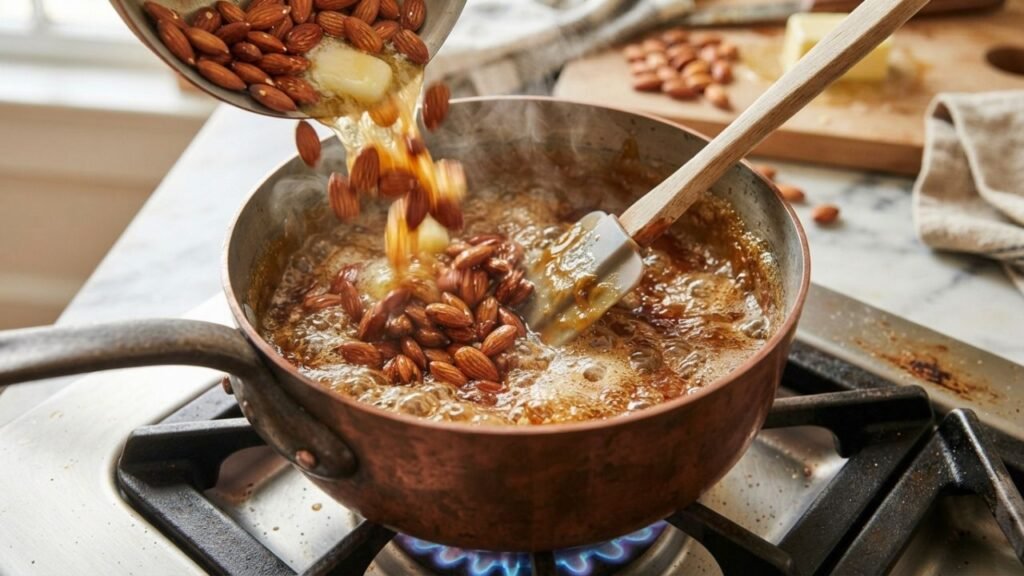
Once the caramel reaches the correct temperature, the remaining ingredients should be added quickly. The mixture will begin to thicken as soon as it starts cooling.Work carefully because melted sugar is extremely hot and can cause serious burns. Keep your hands and face away from splashing caramel.
Adding Butter
Add the butter carefully and stir until it blends into the caramel. The mixture may bubble when the butter is added, so use caution.
Adding Almonds
Add the toasted almonds and stir quickly until they are evenly coated. Do not spend too much time stirring because the brittle can begin to set in the pan.
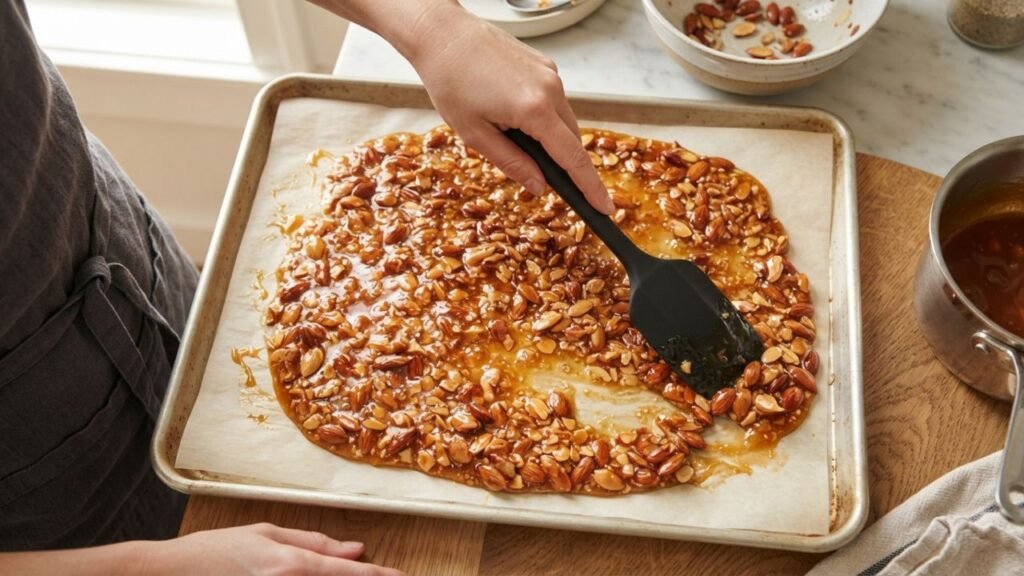
Spreading and Cooling
After the almonds are coated, immediately transfer the mixture to your prepared surface. Speed is important because hot caramel becomes difficult to spread as it cools.
The way you spread and cool the brittle also affects its final texture. A thin, even layer usually produces pieces that are easier to break and pleasantly crunchy.
Spreading
Pour the hot mixture onto a parchment-lined or lightly greased baking sheet. Spread it into a thin, even layer using a heat-resistant spatula.Do not worry about making the surface perfectly smooth. Focus on keeping the thickness reasonably even.
Cooling
Allow the brittle to cool completely at room temperature. It should become firm and hard before you try to break it.Once completely cool, break it into pieces by hand or use a sturdy utensil. Avoid refrigerating it because condensation can introduce moisture.
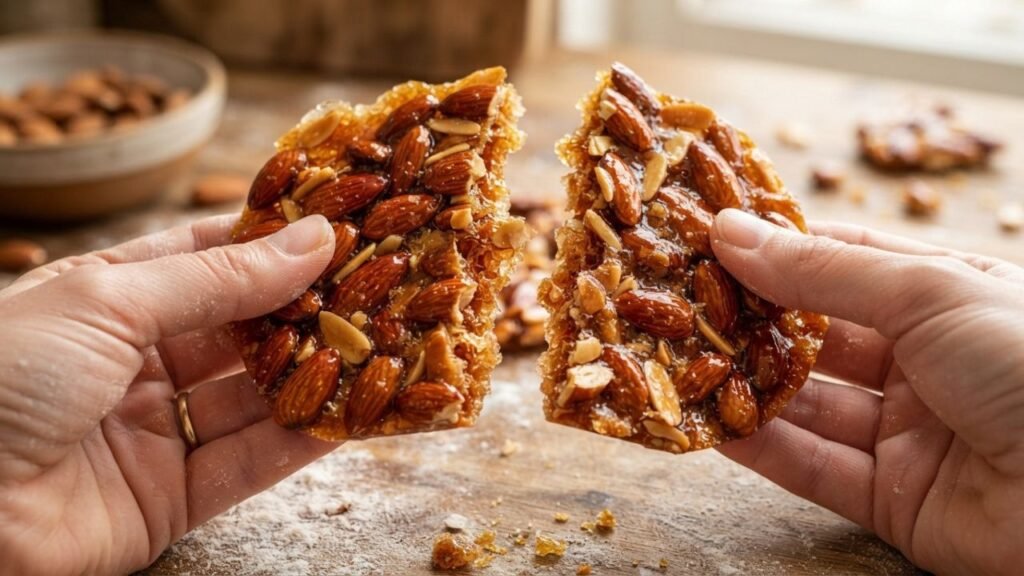
Getting the Perfect Crisp Texture
The perfect Almond Nut Brittle should not bend or feel soft when you bite it. It should break cleanly and have a light, crisp texture around the almonds. Temperature is the biggest factor, but moisture also matters. Even properly cooked brittle can become soft if it is left exposed to humid air.
Temperature and Time
Cooking the caramel to around 300°F (149°C) allows enough moisture to evaporate for a hard, crunchy finish. Let the brittle cool fully before judging its texture.
Avoiding Chewiness
Chewy brittle is usually the result of undercooked caramel or moisture exposure. Cook the sugar to the hard-crack stage and store the finished candy in an airtight container.
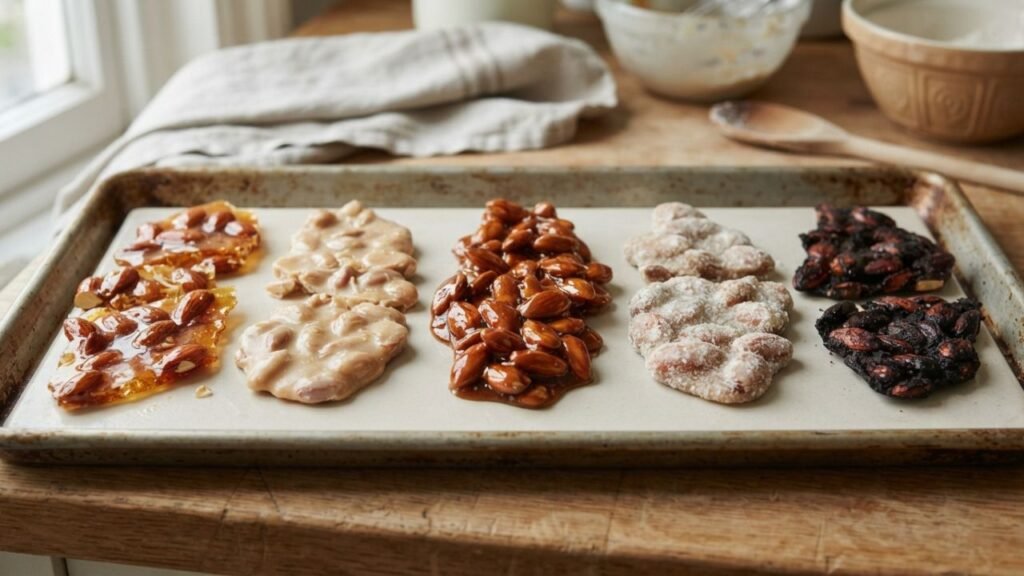
Common Issues and Solutions
Even a simple brittle recipe can develop texture problems. Most issues come from incorrect caramel temperature, excess moisture, or overheating.Understanding the cause makes it easier to fix the problem the next time you make a batch.
Chewy Brittle
If the brittle is chewy, the caramel may not have reached the hard-crack stage. Cook it to about 300°F (149°C) for a firmer texture.
Grainy Caramel
Grainy caramel usually happens when sugar crystals form during cooking. Avoid excessive stirring and keep sugar crystals from building up on the sides of the pan.
Burnt Caramel
Burnt caramel becomes very dark and develops a bitter taste. Keep the heat controlled and watch the color closely as the sugar caramelizes.
Sticky Brittle
Sticky brittle usually means moisture has affected the caramel. Humid air, undercooked sugar, or poor storage can all cause this problem.
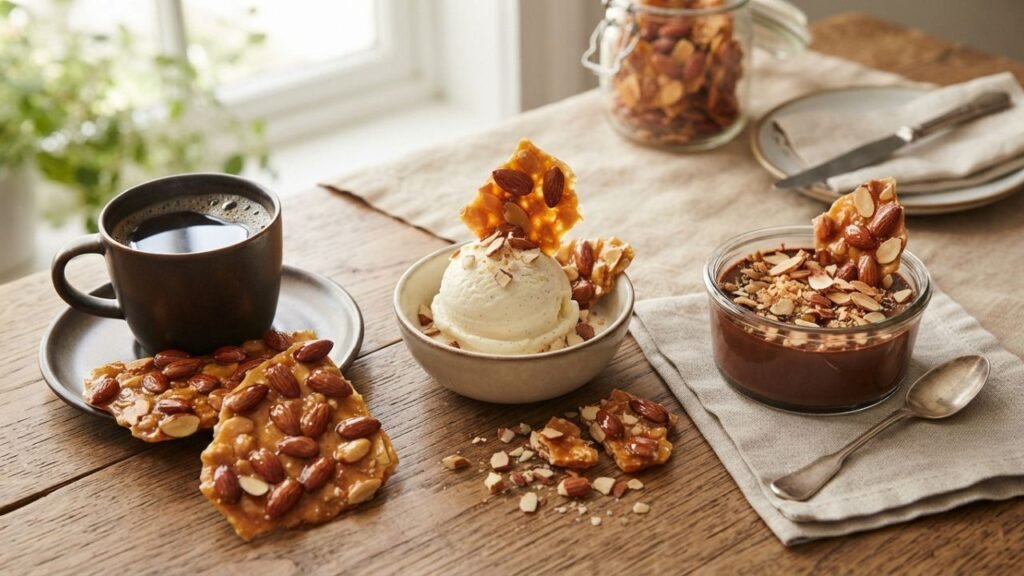
Serving and Pairing Ideas
Almond brittle is delicious as a snack, but its crunchy texture also makes it a useful dessert topping. Break it into small pieces and add it to ice cream, cakes, brownies, puddings, or other creamy desserts.It also pairs especially well with chocolate, vanilla, and coffee flavors. For gifting, place completely cooled brittle in a decorative airtight container or food-safe package.
Freshness and Storage
Moisture is the biggest enemy of crisp almond brittle, as it can make the candy soft and sticky. Once completely cooled, store the brittle in a clean, airtight container. Keep it in a cool, dry place away from heat and humidity. When stored properly, it can remain crisp and fresh for several weeks.
Frequently Asked Questions
1. Why Is My Brittle Not Crunchy?
The caramel may not have reached a high enough temperature. Moisture from humid air can also make brittle lose its crunch after cooking.
2. What Temperature Should It Reach?
For a crisp texture, the caramel should reach approximately 300°F (149°C), the hard-crack stage.
3. Can I Skip the Thermometer?
You can use the cold-water test instead, but a candy thermometer is more accurate. The caramel should form hard threads that snap when dropped into cold water.
4. Can I Use Sliced Almonds?
Yes, sliced almonds work well. They create a lighter and more delicate texture than whole or chopped almonds.
5. Why Is My Caramel Grainy?
Graininess is usually caused by sugar crystals forming during cooking. Avoid unnecessary stirring and keep the sides of the pan free from sugar crystals.
6. How Long Does Brittle Last?
Properly stored almond brittle can stay crisp for several weeks. Keep it sealed in an airtight container and protect it from moisture.
Conclusion
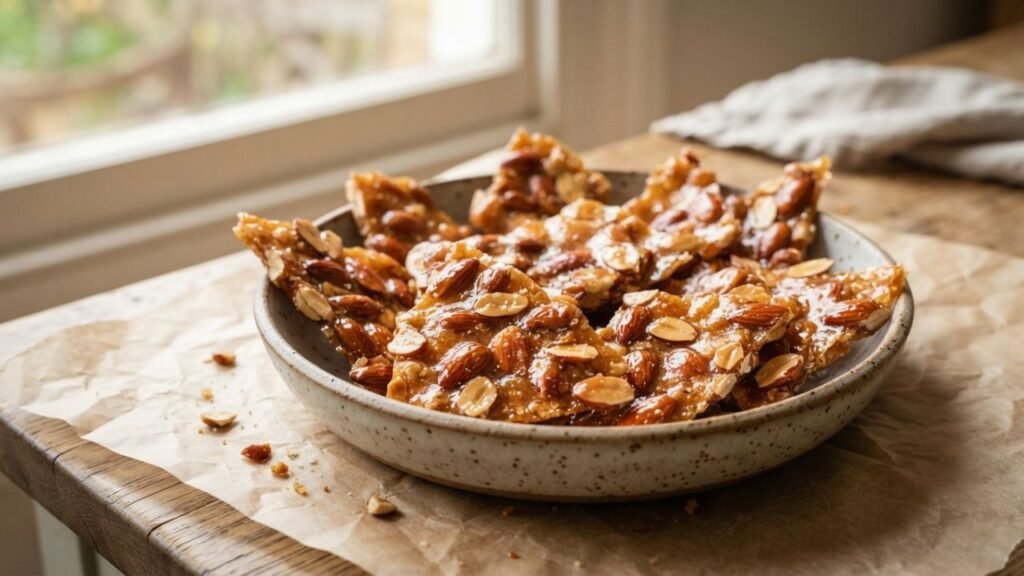
Making crisp almond brittle depends on cooking the caramel to the right temperature and keeping moisture away. Toast the almonds, cook the sugar to about 300°F (149°C), mix quickly, and spread it thin. Once cooled, store it in an airtight container to keep it crisp and crunchy.
About the Author
The author enjoys creating simple homemade sweets and sharing practical cooking techniques. The goal is to make classic treats easier to prepare with clear instructions and useful kitchen tips.